
Simple Sensory Bin Fillers for Toddlers and Preschoolers (Easy DIY Ideas)
If there’s one activity I can almost always count on to keep my kids entertained, it’s a sensory bin. Seriously, give them a container full of rice, a few scoops, and some little toys, and suddenly I might actually get to drink my coffee while it’s still hot. Which, if you have toddlers, you know is basically a miracle. It seems almost too good to be true, that something so simple could actually work, but honestly this one is real. A sensory bin filled with a simple sensory bin filler, and we’re good to go.
The best part? You don’t need expensive sensory toys or complicated setups to make sensory play fun. Our absolute favorite sensory bin fillers are made from ingredients we already have sitting in the pantry. From colorful rice and beans to squishy spaghetti and homemade kinetic sand, there are so many easy ways to create sensory activities for toddlers and preschoolers without spending a fortune.
I’ve rounded up our favorite simple sensory bin fillers that are inexpensive, easy to make, and perfect for all sorts of creative activities. Whether you’re looking for an easy rainy day activity, something to keep littles busy during winter, or a fun way to practice fine motor skills, these homemade sensory bin bases are a great place to start!
Why We Love Sensory Bins
I’ve talked about my love for sensory play before, but there’s a reason sensory bins have become such a staple in our house. Sensory bins are one of those rare activities that are both genuinely entertaining AND educational. Kids think they’re just playing with colorful rice or digging through pretend dirt, but they’re actually practicing all sorts of important developmental skills.
Sensory play can help children develop:
- Fine motor skills: Scooping, pouring, pinching, and transferring materials help strengthen little hands.
- Hand-eye coordination: Moving materials between containers takes concentration and coordination.
- Creativity and imagination: A simple bin of rice can become a construction site, ocean, farm, or pretend bakery.
- Early math skills: Measuring, sorting, counting, and comparing quantities all happen naturally during sensory play.
- Sensory exploration: Different textures give children opportunities to explore tactile sensations at their own pace.
And honestly? Sometimes it’s just nice to have an activity that doesn’t involve a screen or require me to provide constant entertainment or supplies.
Our Favorite Simple Sensory Bin Fillers
These are some of our favorite homemade sensory bin bases. Most use inexpensive pantry ingredients, and several can be made ahead of time and stored for future activities (we’ve had our colored rice for years at this point!).
Colored Rice Sensory Bin Filler

If you’re completely new to sensory bins, I would probably recommend starting with colored rice, provided your child is old enough to safely play with small, loose materials. It’s inexpensive, easy to make, and incredibly versatile. Plus, once you’ve made a batch, you can reuse it for all sorts of different sensory activities.
Colored rice is especially fun because you can customize the colors to match practically any theme. Make blue rice for an ocean sensory bin, green rice for a farm or garden, or warm autumn colors for a fall activity.
We love adding measuring cups, funnels, and little containers for scooping and pouring.
Why we love it:
- Inexpensive and easy to make in large batches
- Great for scooping, pouring, and transferring
- Can be stored and reused when kept clean and dry
- Easy to customize for holidays and seasonal activities
Learn How to Make Colored Rice for Sensory Bins Here!
Colored Beans for Sensory Play

Colored beans are another fantastic sensory bin filler, especially if you’re looking for something with a different texture than rice. Beans are larger and heavier, making them really satisfying to scoop, pour, and move around.
I also love how easy they are to incorporate into themed sensory bins. You can create colorful sorting activities, pretend gardens, construction sites, or seasonal setups using the same basic filler. Plus, when the colors get mixed, it is one billion times easier to sort them out if you’re looking for a certain color for a themed bin than it would be with rice.
One of my favorite things about colored beans is how well they work with little containers and scoops. The sound of the beans pouring from one cup to another is part of the sensory experience too!
Why we love them:
- Easy to color and customize
- Great for scooping and transferring activities
- Different sizes and shapes provide interesting textures
- Can be stored and reused when kept clean and completely dry
Keep in mind that dried beans are choking hazards and should only be used with children who are developmentally ready to handle small materials safely.
Learn How to Make Colored Beans for Sensory Play Here!
Colored Oats Sensory Bin Base

Colored oats might be one of the most underrated sensory bin fillers. They’re soft, lightweight, inexpensive, and incredibly easy to make. If you already have a container of old-fashioned oats sitting in your pantry, you’re more than halfway there.
Unlike rice or beans, oats have a softer, slightly rough texture that makes them really interesting for sensory exploration. They’re also surprisingly easy for kids to scoop into little piles, which is something my kids particularly enjoy.
Our colored oats recipe only requires three ingredients, and the hands-on preparation takes about five minutes. You’ll just need to allow time for them to dry completely before playing.
Why we love them:
- Made with inexpensive pantry ingredients
- Soft, lightweight texture
- Great for scooping and pouring
- Easy to make in different colors
- Perfect for farm, garden, and nature-themed bins
Get Our Easy Colored Oats Sensory Bin Recipe Here!
Homemade Kinetic Sand

If your kids love playing with sand but you don’t love finding actual sandbox sand tracked through your entire house, homemade kinetic sand is worth trying. This sensory bin filler has a completely different texture than rice, beans, or oats. Instead of simply scooping and pouring, kids can squeeze, shape, mold, and crumble the sand. It’s especially fun for pretend construction sites, beach activities, and sensory bins that involve building or creating things. And because you’re making it yourself, you can customize the colors and make a batch that fits your activity.
Why we love it:
- Soft, moldable texture
- Great for building and imaginative play
- Works with cookie cutters, molds, and small tools
- Can be customized for different themes
- A fun alternative to traditional dry sensory fillers
This homemade sensory sand is intended for play, not eating. Follow the recipe’s ingredient safety guidance and supervise children closely.
Get Our Homemade Kinetic Sand Recipe Here!
Colored Spaghetti Sensory Bin

If you’re looking for something completely different from traditional sensory bin fillers, colored spaghetti is SO much fun. This is one of those activities that looks a little ridiculous while you’re preparing it, but kids absolutely love it. Cooked spaghetti creates a slippery, squishy, stretchy sensory experience that’s completely different from dry fillers. And when you add bright colors? Even better.
Colored spaghetti is particularly fun for kids who enjoy messy sensory play. They can pull it apart, scoop it, squish it, and explore the texture with their hands. You can also use it for themed sensory bins, like farm fields or a fun Halloween themed bin (pictured above).
Why we love it:
- Made with inexpensive kitchen ingredients
- Unique squishy, slippery texture
- Great for hands-on sensory exploration
- Easy to make in multiple colors
- Fun for pretend cooking and imaginative play
Because this is a moist, cooked-food filler, it’s best for short-term play rather than long-term storage.
Learn How to Make Colored Spaghetti for Sensory Bins Here!
DIY Edible Dirt Sensory Bin Filler
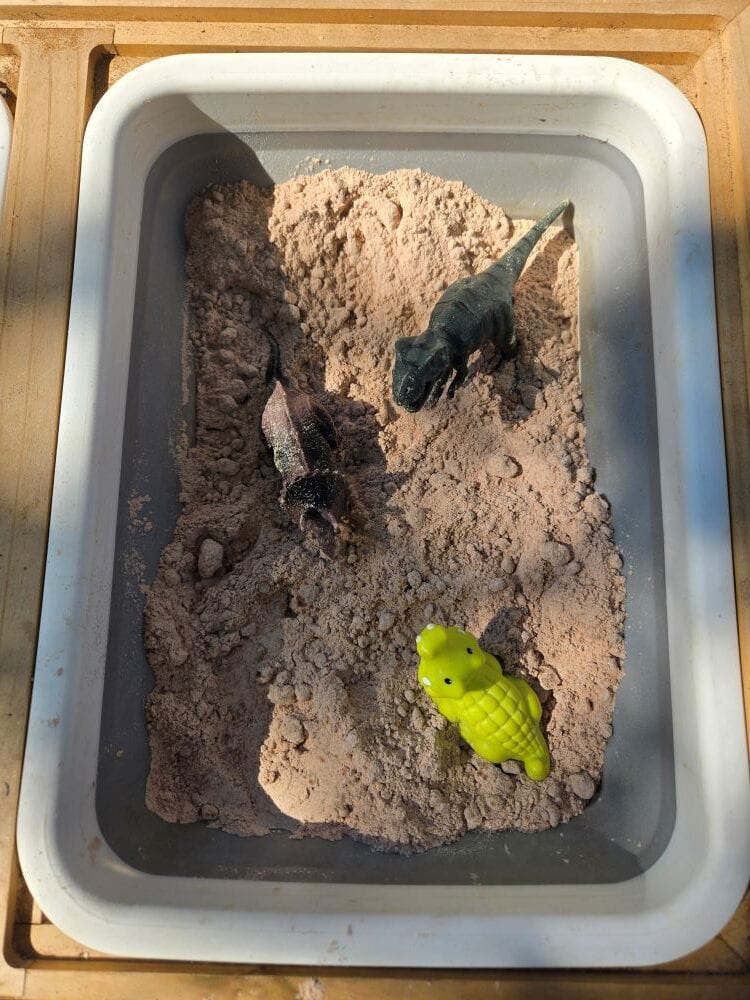
This might be one of my favorite sensory bin fillers simply because of how many different activities you can create with it. If your kids are anything like mine, dirt, dinosaurs, and construction equipment are basically guaranteed winners.
Our homemade edible dirt sensory filler creates a realistic-looking dirt base without using actual soil.It’s perfect for pretend gardens, construction sites, dinosaur digs, and all sorts of imaginative play activities. I especially love using this one when we want something a little messier and more hands-on.
Why we love it:
- Great for pretend outdoor activities
- Fun for construction and dinosaur-themed bins
- Uses simple ingredients
- Provides a different sensory texture
- Works for gardening and nature activities
Although this recipe is designed to be taste-safe when prepared correctly, it isn’t intended as a snack. Check ingredients for allergens and supervise play.
Get Our DIY Edible Dirt Sensory Bin Recipe Here!
Seasonal Sensory Bin Ideas
One of my favorite things about making our own sensory bin fillers is how easy they are to customize for different seasons and holidays. You don’t have to reinvent the wheel every time you want to create a new sensory activity. Often, you can use the same basic sensory bin fillers and just change the colors or accessories.
During the fall, we love incorporating warm autumn colors, pumpkins, and harvest themes into our sensory activities. I’ve rounded up some of our favorite fall sensory bins for toddlers if you’re looking for easy autumn inspiration.
Winter is another great time for sensory play, especially when it’s too cold to spend much time outside. Our winter sensory bin using mini marshmallows is a fun pretend-snow activity for older children who can safely handle the sticky marshmallows. And if you’re looking for something with a more realistic snowy texture, try our homemade edible play snow. It’s a fun way to bring a little winter sensory exploration indoors, even when there’s no actual snow outside!
The best part about seasonal sensory bins is that you can keep them as simple or elaborate as you’d like. Sometimes a new color of rice and a few seasonal toys are all it takes to make an old activity feel brand new.
How to Choose the Best Sensory Bin Filler
With so many different sensory bin materials available, choosing one really comes down to your child’s age, interests, and the type of play you’re hoping to encourage.
Here’s a quick comparison of our favorite DIY sensory bin fillers.
| Sensory Bin Filler | Texture | Great For |
| Colored Rice | Dry, grainy | Scooping, pouring, sorting |
| Colored Beans | Smooth, firm | Transferring, pretend play |
| Colored Oats | Soft, lightweight | Scooping, farm and nature bins |
| Kinetic Sand | Soft, moldable | Building, shaping, construction |
| Colored Spaghetti | Wet, slippery | Squishing, messy sensory exploration |
| Edible Dirt | Crumbly, soil-like | Construction, dinosaurs, gardening |
Personally, I like keeping a few different sensory bin fillers available so we can switch things up depending on what the kids are interested in. Colored rice and oats are great for everyday sensory play, while kinetic sand and spaghetti are fun when we want something a little different.
Sensory Bin Safety Tips for Toddlers and Preschoolers
Sensory play is wonderful for young children, but choosing age-appropriate materials is incredibly important. Not every sensory bin filler is safe for every child, especially younger toddlers who still explore the world by putting things in their mouths.
A few important things to keep in mind:
- Watch for choking hazards. Dry beans, rice, small toys, and other loose materials can pose choking risks. Avoid these materials for children who still mouth objects.
- Always supervise sensory play. Stay close enough to intervene quickly, especially when using loose materials.
- Choose age-appropriate accessories. Avoid small figurines, beads, buttons, and other tiny accessories for younger children.
- Remember that taste-safe doesn’t mean completely risk-free. Even food-based sensory fillers can present choking, allergy, or food-safety risks.
- Be mindful of allergies. Check ingredients in homemade fillers, especially recipes containing wheat, coconut, dairy, or other potential allergens.
- Keep everything clean. Wash sensory bins and tools regularly, and discard fillers that become wet, dirty, moldy, or contaminated.
For children who are still mouthing toys and materials, consider simpler sensory experiences using appropriately prepared, age-safe materials under close supervision. And remember, sensory play doesn’t have to involve tiny objects to be beneficial!
Tips for Making Sensory Bins Less Messy
Okay, lets state the obvious. Sensory bins can be messy. And while I love sensory play, I do not particularly love finding colored rice in random corners of my house three weeks later. Over time, I’ve found a few things that make sensory play significantly easier to manage.
- Use a large tray or mat. Placing your sensory bin inside a larger tray or on a washable mat helps catch spills.
- Keep the filler level relatively low. You don’t need to fill an entire sensory table to make it entertaining. A shallow layer is usually plenty.
- Establish simple rules. We practice keeping sensory materials inside the bin and using scoops rather than throwing handfuls across the room.
- Take sensory play outside when possible. If the weather is nice, this is my favorite option. A garage or other easy-to-clean area can work well too.
- Store reusable fillers in sealed containers. Dry rice, beans, and oats can often be reused when they’ve been kept clean and completely dry.
Frequently Asked Questions About Sensory Bin Fillers
What can I use to fill a sensory bin?
There are tons of inexpensive sensory bin fillers you can use, including colored rice, dry beans, oats, homemade kinetic sand, cooked spaghetti, and homemade sensory dirt. The best option depends on your child’s age, developmental stage, and sensory preferences.
What are the cheapest sensory bin fillers?
Rice, oats, dried beans, and pasta are often some of the most affordable sensory bin fillers because you can purchase them in bulk and use inexpensive pantry ingredients to customize them. For reusable dry fillers, proper storage can help stretch your supplies further.
What sensory bin fillers are best for toddlers?
The best sensory bin fillers for toddlers depend on whether they’re still putting objects in their mouths. Small dry materials like rice and beans can be choking hazards, so they’re not suitable for children who mouth objects. Supervised sensory activities with developmentally appropriate materials are a better choice.
Can you reuse sensory bin fillers?
Yes! Many dry sensory bin fillers, including colored rice, beans, and oats, can be reused when they’re stored properly and remain clean and completely dry. Wet or perishable sensory materials, such as cooked spaghetti, should not be treated as long-term reusable fillers.
How long should kids play with sensory bins?
There’s no magic number! Some children might enjoy a sensory bin for five or ten minutes, while others will happily explore for much longer. I usually let my kids lead the activity rather than setting a specific time limit. As long as they’re interested, playing safely, and having fun, I’m happy to let them keep exploring.
Simple Sensory Play Doesn’t Have to Be Complicated
If there’s one thing I’ve learned from making sensory bins over the years, it’s that simple is usually better. You don’t need a perfectly coordinated Pinterest-worthy sensory table or an entire closet full of expensive supplies. Sometimes a bag of rice, a few scoops, and some plastic animals are more than enough. Honestly, we have about three toys that my kids will consistently go to for in sensory play – a couple scoops, a bowl, and some small Happy Meal style action figures. That and a big sensory bin of rice or beans and they’re in heaven. Any other toys are all in rotation, to keep it interesting.
Whether you try colorful beans, homemade kinetic sand, squishy spaghetti, or one of our other easy sensory bin fillers, I hope these ideas give you some inspiration for your next activity.
Happy sensory playing!


