
The Essentials for Sensory Play: Everything You Need for Fun, Engaging Learning

If you’ve spent any amount of time around here, you’ll know that sensory play is HUGE in our house. While I was once a sceptic (because it really is kinda messy??), I soon realized that this type of sensory input is something that my high energy, highly sensitive kids CRAVE. And need. Once I realized that sensory play is an easy gateway to independent play (hello coffee drinking time) and to easier bedtimes, I was completely hooked. It’s also definitely a bonus that it helps strengthen key skills like fine motor control, creativity, focus, and problem solving.
Whether you’re a parent setting up a sensory bin at home or a teacher creating a classroom station, here are the found by trial and error essentials for sensory play that we love and help to make it both fun and educational. Disclaimer: This is a very link heavy post. I’ve linked a lot of our favorites to give you ideas of what works for us. But do NOT feel like you need to spend a ton of money in order to make sensory play fun. Chances are, you have several perfect items around home already. Use those first! Oh, and if you can, setting up sensory play in an outdoor space or garage (where the mess is less overstimulating) is a major help too!
1. A Sensory Base Material
Every sensory play setup starts with a base. This is the material kids will scoop, pour, squish, and dig through.
Popular sensory base ideas:
- Dry bases: colored rice, beans, pasta, sand, oats
- Sensory experience: Light, grainy, and easy to pour or scoop.
- Wet or squishy bases: baking soda science, play dough, slime, cloud dough, or water bins
- Sensory experience: Smooth, pourable and/or moldable — these textures engage both touch and visual senses.
- Edible bases: cereal, colored spaghetti, or edible “snow” or “dirt”
- Sensory experience: Soft, safe, and taste friendly — ideal for toddlers and sensory sensitive kids.
Each base material provides a different texture and experience, helping children explore new sensations and practice fine motor skills while they play. The different textures also completely alters the type of play.
2. A Play Surface or Tray
Contain the mess and give kids space to explore by using a sensory tray or bin.
Look for:
- Large, shallow plastic bins (storage containers work great because they come with a lid!)
- Divided trays for sorting and organizing
- Washable mats or tablecloths underneath for easy cleanup
Having any type of designated sensory play area helps makes cleanup simple (because you’ve already prepared for it!) and encourages kids to return to play independently (because they know where it is).
3. Tools for Scooping, Pouring, and Mixing
The magic of sensory play often happens when kids use tools to manipulate materials. These tools also help build hand-eye coordination and strengthen small muscles in the hands and wrists.
Add ins that we play with in most all bases:
- Measuring cups and spoons
- Funnels and small bowls
- Tongs, tweezers, and scoopers
- I’m going to specifically call out this Fine Motor Tools Set. It’s an investment but man, we use these tools ALL the time and they are so good for development. Durable too! The brand has plenty of smaller options if you’re not looking for a 24 piece set as well.
Add ins that work best for dry bases:
- Rolling pins and cookie cutters (especially for play dough)
Add ins that work best for wet bases:
- Toothbrushes or scrubbing brushes
- Syringes and pipettes
Having standard toys like these encourage open ended exploration and introduce early math and science concepts like volume and measurement.
4. Themed Accessories and Loose Parts
Once your base and tools are ready, add themed loose parts to inspire imaginative play.
For example:
- Nature sensory bin: pinecones, rocks, leaves, and toy insects
- Ocean bin: blue colored spaghetti or colored water, shells, toy sea animals, and scoops


- Construction bin: edible dirt, small trucks, and construction vehicles


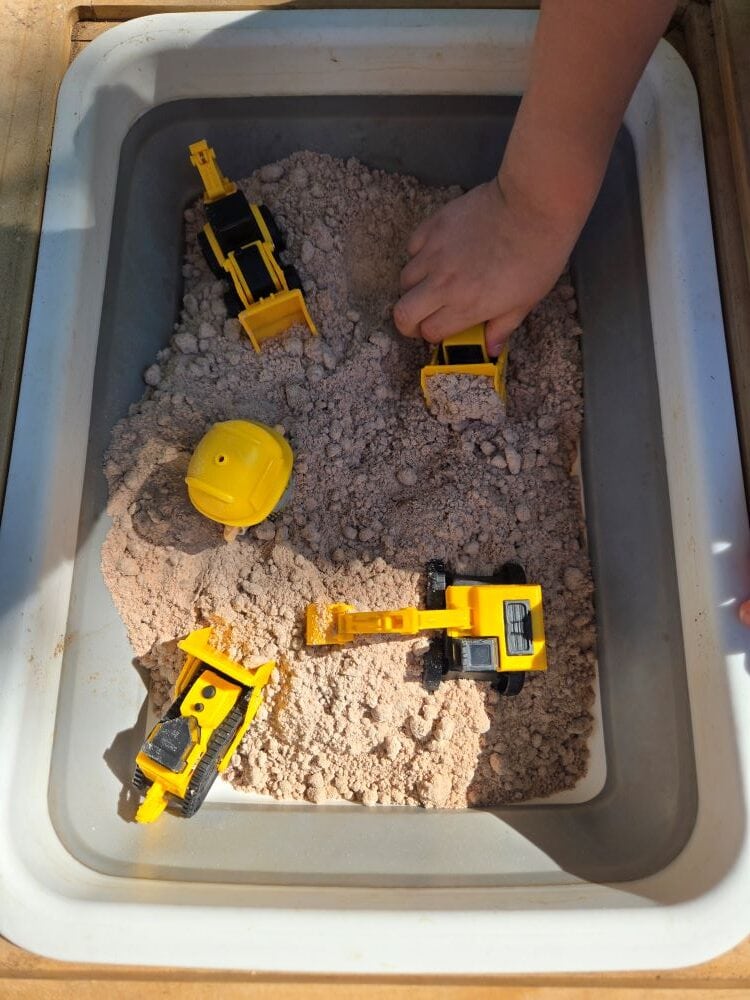
Loose parts spark creativity and storytelling while promoting language development as kids describe what they see and do. Also, my children will put small action figures (like little people) or matchbox cars in almost every sensory bin we do. Like… I can’t think of a single bin that hasn’t had Lightning McQueen in it at some point.
5. Safe and Engaging Add-Ons
Don’t forget the sensory details that make playtime irresistible:
- Colors: food coloring, liquid watercolor, or colored rice
- Scents: a drop of vanilla extract, cinnamon sticks, or citrus zest
- Sounds: bells, rain sticks, or crunchy materials like cereal
Adding extra sensory layers turns an ordinary bin into a full sensory experience. It surprised me a lot when my oldest would get overwhelmed by strong scents. It just wasn’t something I had considered, but adding in small levels of different scents to sensory play I think helped him to start to accept stronger scents (like the overwhelming scents of walking into any Christmas store).
6. Clean-Up and Storage Essentials
These are not fun for kids. But they are fun for adults because they make it less stressful when you see a giant mess being made, because you know that you have a solution prepped and ready. A few simple tools make sensory play easier to manage:
- Airtight containers or jars for reusing materials
- Washcloths and wipes for quick hand cleaning
- A small broom or dustpan for sweeping spills (or just your giant shop-vac on hand)
- Zip-top bags for themed kits (store ocean, farm, or holiday sets separately)
Keeping supplies organized helps sensory play stay enjoyable instead of overwhelming. Having bags for themed toys labelled with the picture of what they are (pumpkin for fall, digger for construction, etc) also really helps my kids take ownership of the clean up.
7. Optional Additions for Extended Play
If you start to realize you’re spending all of your time at the sensory bin and you, like me, have a child that loves sensory play, you can extend the experience with:
- A sensory table or water table for larger setups
- Aprons or smocks for messy materials
- Music or movement props like scarves and ribbons for full-body sensory fun
These extras make it easy to tailor sensory activities to your child’s age, mood, and curiosity, but are also not things that are NEEDED for sensory play. Especially a sensory table is an investment that I wouldn’t make unless you know you have a kid who is into it. But setting your kids up with the right tools (like the 6 things above) makes me think you may be coming back to this section before too long 😊
But Really, Overall:
The best sensory play setups don’t have to be fancy — simplicity is almost always best. With a few base materials, some tools, and creative add ins, you can create endless opportunities for learning through play.
Give your kids the chance to explore textures, colors, or imaginative worlds, in a fun and safe way, and you’ll quickly see that you’ve got some sensory play kiddos who are growing up confident, curious, and engaged with their environment. And you’ll be enjoying more hot cups of coffee than you ever thought possible!


